Think you need a big garden to grow your own food? Think again. Even the smallest patio, balcony, or courtyard can become a surprisingly productive space with a little creativity.
Growing your own fruits, vegetables, and herbs isn’t just rewarding — it’s also a great way to get outside, save money, and enjoy fresh produce picked just moments before you eat it. When space is limited, the secret is to grow upwards, use containers, and choose crops that thrive in compact areas.
Here are some simple and creative ways to grow food in small gardens.
1. Use Pots and Containers
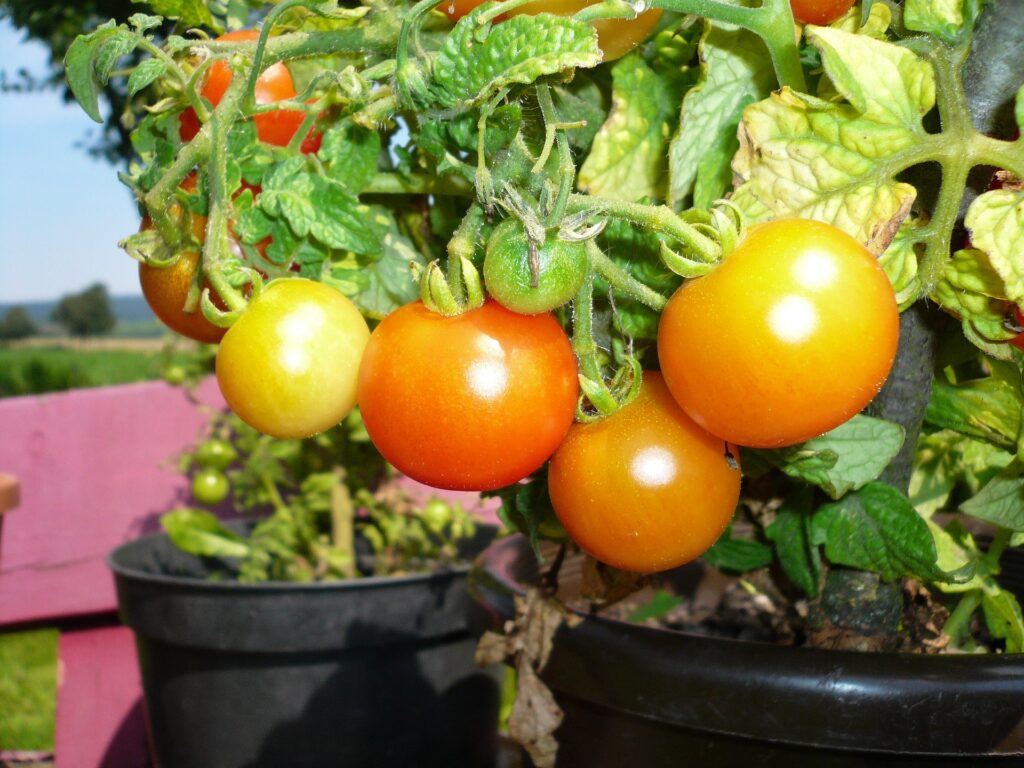
A small patio or balcony can be incredibly productive when you make use of pots and planters. Tomatoes, peppers, strawberries, and even potatoes grow happily in containers, and they can be moved around to make the most of sunlight.
You can also maximise space by:
- growing different crops at different heights
- placing pots on steps
- using plant stands
- grouping containers together
2. Choose Herbs and Salad Crops
Herbs are perfect for small spaces. They grow happily in small containers and need very little maintenance. Basil, mint, parsley, and chives are all excellent choices.
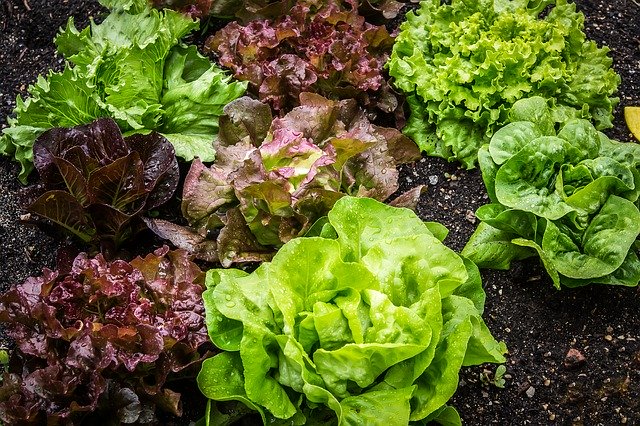
Salad crops are also ideal because they grow quickly and can be harvested little and often. Even a small container can provide regular fresh leaves.
To get the most effective use out of a small area, you can use the vertical space of fences and walls to grow produce.
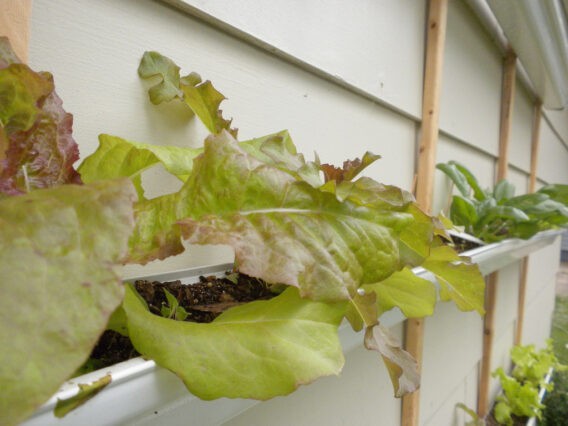
Everyday household guttering makes for a fabulous salad garden that you can really cram with seasonal lettuces, other salad leaves and radishes. Make sure you choose guttering that has a decent depth, so your produce has more room for its roots to grow.
3. Grow Vertically with a Salad Gutter Garden
Everyday household guttering makes a fantastic vertical salad garden. You can fill it with lettuces, rocket, spinach, and radishes to create a compact but productive growing space.
Cut a length of deep household guttering to the required size and drill small drainage holes every couple of inches or so at the bottom.
There needs to be something at the end of each length to prevent soil from washing straight out, and the easiest option is to buy the corresponding stop-ends for the guttering. These are pieces of plastic that clip on, and they cost less than a pound. Or, alternatively you can use a piece of shaped ply-wood and glue it to the end.
Fix it to the fence or wall using brackets, again these are cheaply available from any DIY or builders’ merchants. Place a few handfuls of gravel along the guttering and spread out evenly to help with drainage. Fill the guttering with compost and either sow seeds directly or plant out seedlings.
For maximum production, you can plant closely, and this works well in a gutter garden. Closely packed plants compete for room and light, and this means that once you pick a few leaves, something else rushes to make the most of the new gap. Soon, the guttering will be bursting with leaves that keep growing the more you pick.
4. Use Window Boxes and Hanging Baskets
You can grow a surprising amount in a window box. Try garlic bulbs, herbs, lettuce, or edible flowers. Window boxes can be bought or made to any depth you require, making them a versatile planter for crops. However, it is probably better to go for smaller growing produce, as you still want to see from your window!
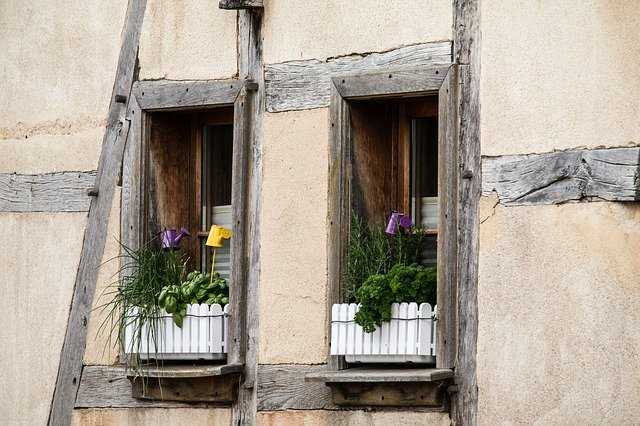
Hanging baskets also look attractive, and can be used for crops such as trailing tomatoes. It is important to keep them extra well-watered and hanging baskets can dry out quickly.
5. Make the most of Walls and Fences
Most small gardens have fences or walls that can support climbing plants. These are ideal for growing crops such as runner beans, peas, French beans, or even a well-managed grape vine!
6. Growing Fruit Trees in small Spaces
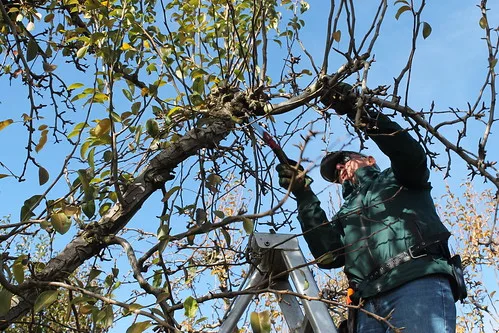
Fruit bushes and trees can be grown in any garden, even small ones! Where space is a problem, fruit trees can be trained to grow in shapes such as fans, cordons or espaliers. These shapes, when grown next to a wall or fence, take up very little room and are ideal for boosting the harvest from smaller gardens.
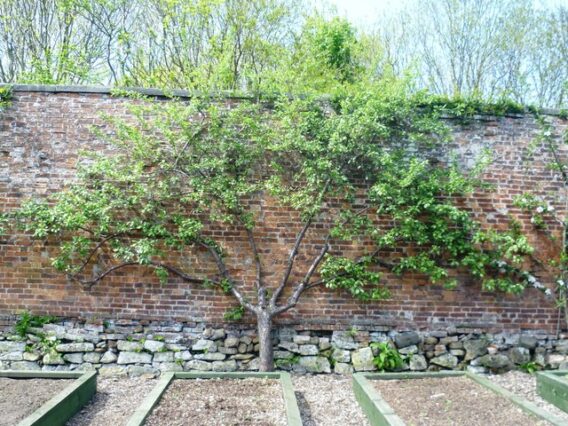
If you have a south facing wall, make the most of it by training fruit trees against it. In a sunny yard, it is even possible to grow fruits such as nectarines, peaches and apricots here in the UK, although for more reliable fruit, fan shaped apple or plum trees work well on walls.
Cordon fruit trees are another true space saver and one of the simplest shapes to get started with. It has one straight stem that is trained to grow in a diagonal direction, either supported by a wall or by posts and wire. It has short spurs each side of the stem that bear fruit.
A benefit of growing fruit trees as cordons is that you can fit many different trees in a small space, as each tree only needs to be around 3 feet apart. Any fruit tree that can bear fruit on short side shoots is suitable for cordon training.
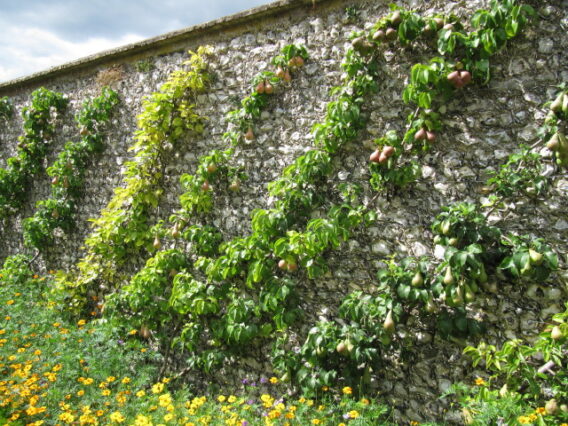
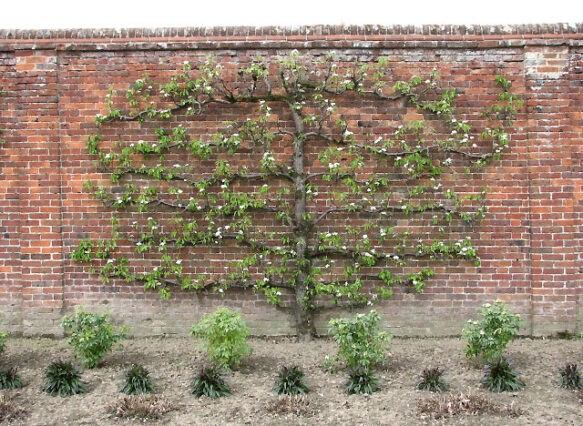
Espalier trees are trained to have several horizontal branches, again either supported against a wall or on wires. One fantastic benefit of training fruit trees as espaliers is that you can use them to form an attractive fence or screen.
Dwarf pyramid trees grow to a compact size, usually no more than 7 feet in height and a spread of approximately 4 feet, and are good for smaller gardens.
7. Grow in Tiered Planters
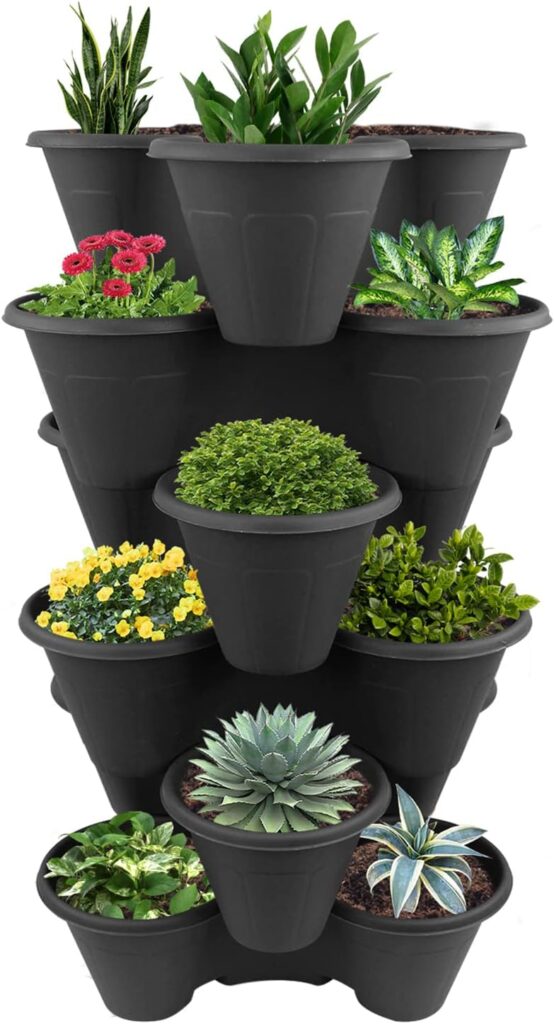
Tiered planters are a simple way to grow more food in a small space. By stacking planting areas vertically, you can grow several crops in the footprint of a single pot. They’re ideal for patios, small gardens, and even balconies where ground space is limited.
These planters work particularly well for shallow-rooted crops such as herbs, salad leaves, and strawberries. You can also mix plants, placing trailing varieties like strawberries or tumbling tomatoes on the top level so they spill over the sides, while growing compact herbs or lettuce on the lower tiers.
Tiered planters also make harvesting easier, as everything is at a comfortable height and close together. They’re great for children too, as little hands can reach the plants without stepping on soil.
You can buy ready-made tiered planters, like the one pictured, but it’s also easy to create your own using stacked pots of decreasing size. Simply place a large pot at the bottom, fill with compost, then position a smaller pot on top and repeat. This creates an attractive, space-saving growing feature that can produce a surprising amount of food.
8. Use Grow Bags
Grow bags are ideal for small spaces and can be tucked into corners or along pathways. They’re perfect for potatoes, tomatoes, courgettes, and even carrots. Because they’re lightweight, you can move them to chase the sun.
9. Try Square Foot Gardening
Square foot gardening is a simple method that helps you grow more food in less space. Instead of planting in long rows, you divide a small bed or large container into a grid of squares, usually about one foot by one foot. Each square is then planted with a different crop.
This approach reduces wasted space and allows you to grow a variety of vegetables in a compact area. For example, you might plant one tomato plant in a square, four lettuce plants in another, nine spinach plants in the next, and sixteen radishes in another. By spacing crops this way, you can fit far more into a small garden than traditional planting methods.
When one crop is harvested, you can simply replant that square with something new, keeping the garden productive throughout the season.
10. Grow Dwarf Vegetable Varieties
Many vegetables now come in compact varieties designed specifically for smaller spaces. Dwarf beans, patio tomatoes, mini cucumbers, and compact courgettes all produce generous harvests without taking over the garden. They also tend to need less support and are easier to manage, which is helpful for beginner gardeners.
Another benefit is that dwarf varieties can often be planted closer together, allowing you to grow a wider range of crops in a limited area.
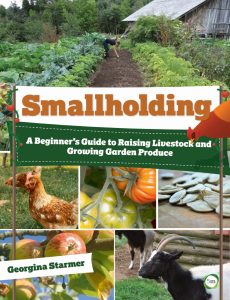
If you like the idea of growing your own food, or if you are thinking about keeping a few chickens for eggs, you may like my book on smallholding for beginners.
Anyone can be a smallholder because it is all about putting food on the table that you have grown or raised yourself. If that sounds like your cup of tea, read some reviews of Smallholding – A Beginner’s Guide to Raising Livestock and Growing Garden Produce.
If you have any ways you like to grow in small spaces, please add your comment. Good luck with your crops!